First visit

What actually happens during your first appointment?

Most chiropractors will tell you what they think. Dr. Foudy shows you. Eleven steps, about 75 minutes, $90. You leave knowing what is going on and whether we can help. And if we cannot help, you leave with a referral to the proper specialist, not a sales pitch.

The eleven steps

  1. Step 1

    Forms

    Online or on the clipboard, you pick. Most patients do it online before the appointment so we can get straight to the exam.

  2. Step 2

    Seven-minute intro video (sometimes)

    For new patients who want context, we have a short video that explains how we work and what to expect.

  3. Step 3

    SOAP consultation (15 minutes)

    Subjective, objective, assessment, pain. Dr. Foudy sits down with you and asks the four questions: Can you help me? What is going on? How long? How much? You answer in your own words.

  4. Step 4

    Postural exam on the posture analysis machine

    You step onto the posture analysis machine, two scales, one under each foot. The bilateral scales measure your weight-bearing differential, whether your weight is loading more to one side. Most patients are surprised how much one side carries. Dr. Foudy also checks how level your head, shoulders, and pelvis sit, and he checks for pronated feet. Your feet are your foundation, and if they have collapsed, he custom-fits orthotics to get them properly supported.

    Dr. Foudy performing a standing posture assessment with a patient
  5. Step 5

    Range-of-motion study with a protractor

    We measure cervical, thoracic, and lumbar flexibility in every direction and document it, along with motion palpation to find muscle guarding and hypomobility. This becomes the baseline we re-measure against later.

  6. Step 6

    Neurological screen

    Wartenberg pinwheel for pinprick sensation along the dermatomes. Reflex testing. Strength testing. Looking for the nerves the imaging will confirm.

  7. Step 7

    Surface EMG, the EKG of your nervous system

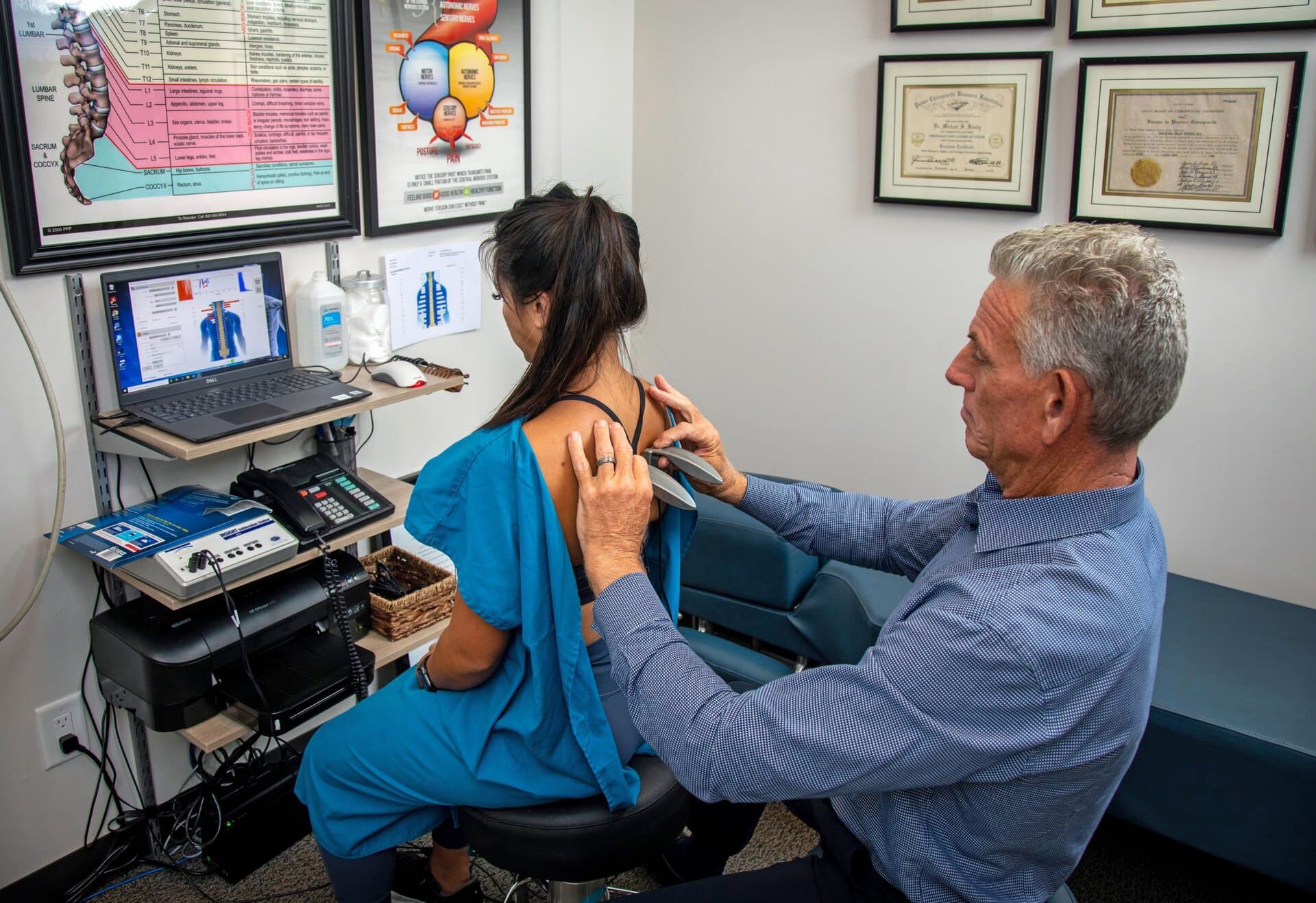
    Non-invasive electrodes go on the skin next to the spine and the computer reads the electrical activity level by level. It is like an EKG: instead of measuring the electrical function of your heart, it measures the electrical function of your nervous system. This is the software side of the assessment, and it measures how the nervous system is functioning, not just where it hurts.

    Dr. Foudy reviewing a computerized nervous system scan with a patient, like an EKG of the nervous system
  8. Step 8

    X-rays, the hardware

    High-frequency digital X-rays (less radiation, better quality). AP and lateral views standard, AP open-mouth for headache patients to see the atlas and axis relationship. Once the EMG has measured the software, the digital X-rays let Dr. Foudy measure and analyze the hardware of your spine. We walk through every film with you.

  9. Step 9

    Palpation and brief validation treatment

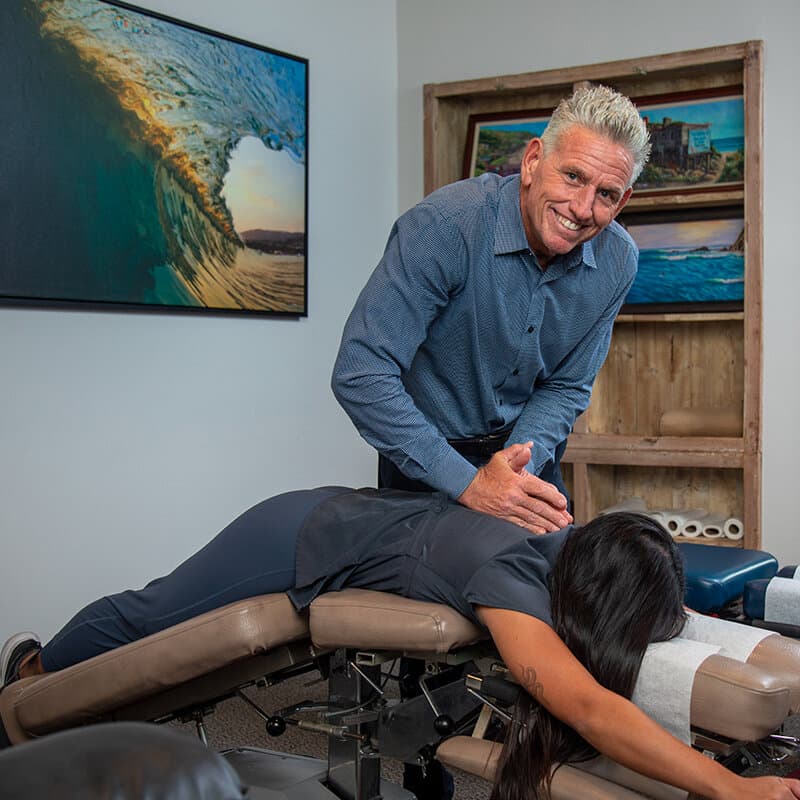
    Dr. Foudy puts his hands on your spine. Often a brief adjustment, sometimes flexion-distraction or a roller pass. You feel the relief, you understand the mechanism.

  10. Step 10

    Exit script and invite spouse

    We invite a spouse or family member to the follow-up visit for the Report of Findings. The plan is easier to commit to when the person at home is on the same page.

  11. Step 11

    Return visit for Report of Findings

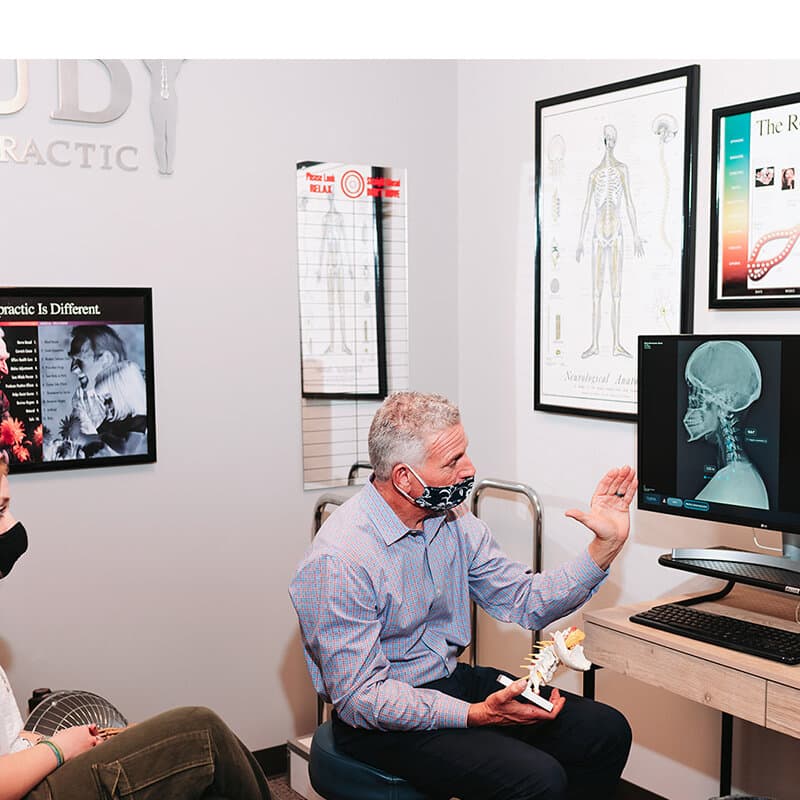
    Dr. Foudy reviews the X-rays, the EMG, and the exam findings, and explains what the cause of your problem is. If he cannot help your condition, he will refer you to the proper specialist. If he can, he presents a plan: cost, frequency, timeline, expected outcome, and whether you want pain relief or corrective care. That part is up to you. You ask questions. You decide.

    Dr. Foudy explaining X-ray findings to a patient during a report of findings consultation

Your feet are your foundation

The posture exam starts at the ground.

Pronated (collapsed) feet tilt the pelvis, and a tilted pelvis stresses the spine above it. That is why the posture analysis machine checks your feet along with your head, shoulders, and pelvis. When the feet are the problem, Dr. Foudy custom-fits orthotics in the office to get your foundation properly supported before the corrective work above it.

Common questions

How long does the first visit take?
About 60 to 75 minutes. The Report of Findings happens at the second visit so Dr. Foudy can review the films and EMG carefully.
Do I have to commit to a plan at the first visit?
No. The first visit is the show-and-tell. The second visit (Report of Findings) is where the plan is presented. You decide then.
Will I get adjusted on the first visit?
Usually a brief validation adjustment, yes. Full treatment starts after the Report of Findings.
Why are the films and EMG done in-house?
So we can read them together at the Report of Findings. No waiting weeks for outside reports. Same day, our equipment, our reading.
What if Dr. Foudy cannot help my condition?
He tells you, and he refers you to the proper specialist. After 37 years in Mission Viejo he knows who the right specialist is for nearly every case. You will not be strung along.
What does the posture analysis machine actually measure?
It is a set of bilateral scales that measures your weight-bearing differential, plus a check of how level your head, shoulders, and pelvis are, and whether your feet are pronated. Your feet are your foundation. If they need support, custom-fitted orthotics are available in the office.

Want to know if Dr. Foudy can help you?

A free show-and-tell consultation walks you through the exam, the X-rays, the EMG, and the plan. You leave knowing what is actually going on.