
I get this numbness going down my leg.
When a disc bulges or herniates and presses on a nerve, that pressure is what you feel running down the leg. Taking the pressure off is exactly the point of decompression.
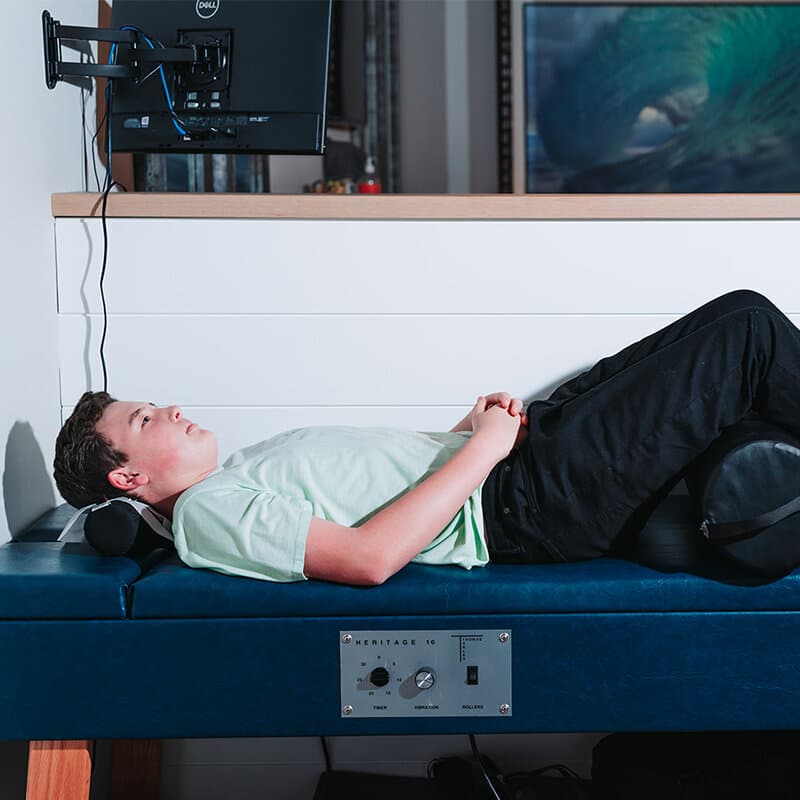
Yes. For the right case, spinal decompression with added oscillation on the AccuSpina table is one of the most powerful tools I have for disc pain, here in Mission Viejo. Picture a disc like a jelly donut. When the jelly pushes out and presses on a nerve, that is what sends pain down your leg. The table gently separates the bones so the disc has room to draw back in.
One unhurried visit tells you whether decompression fits your case. Thursday is afternoons only, 3:00 to 6:00 pm.
I hear these same words almost every week. If one of them is yours, here is what is usually going on. A disc problem rarely sorts itself out, and the longer the pressure stays on the nerve, the more the body works around it. One visit tells you where you stand.
I get this numbness going down my leg.
When a disc bulges or herniates and presses on a nerve, that pressure is what you feel running down the leg. Taking the pressure off is exactly the point of decompression.
I wake up so stiff and sore it takes me half an hour to get moving.
A worn, compressed disc has lost its cushion and its space. Gently giving it room is what the table is built to do, so the morning does not have to start that way.
I have been icing, heating, and taking Advil, and nothing is working.
Those quiet the symptom for a while, but they do not change the pressure on the disc and the nerve. Decompression works on the cause. One visit tells you whether that is your case.
A basic decompression table just pulls. The AccuSpina pulls and then, at the very top of the load, it oscillates. Think of it as a gentle pump. That little back-and-forth at maximum stretch is what works the disc while it has room, instead of just holding it open and hoping. The pull is gradual and computer-controlled, the session is painless, and plenty of patients doze right off on the table.
Laboratory and imaging studies suggest that gently separating the bones lowers the pressure inside the disc, which can help it draw in fluid, oxygen, and nutrients. That is the mechanical idea behind the relief patients feel down the leg. It is how the table is designed to work, not a promise of any one result. The honest measure is your own exam, and that is where we always start.
We bought the most expensive machine because it gets the best results.Dr. Michael Foudy, D.C.
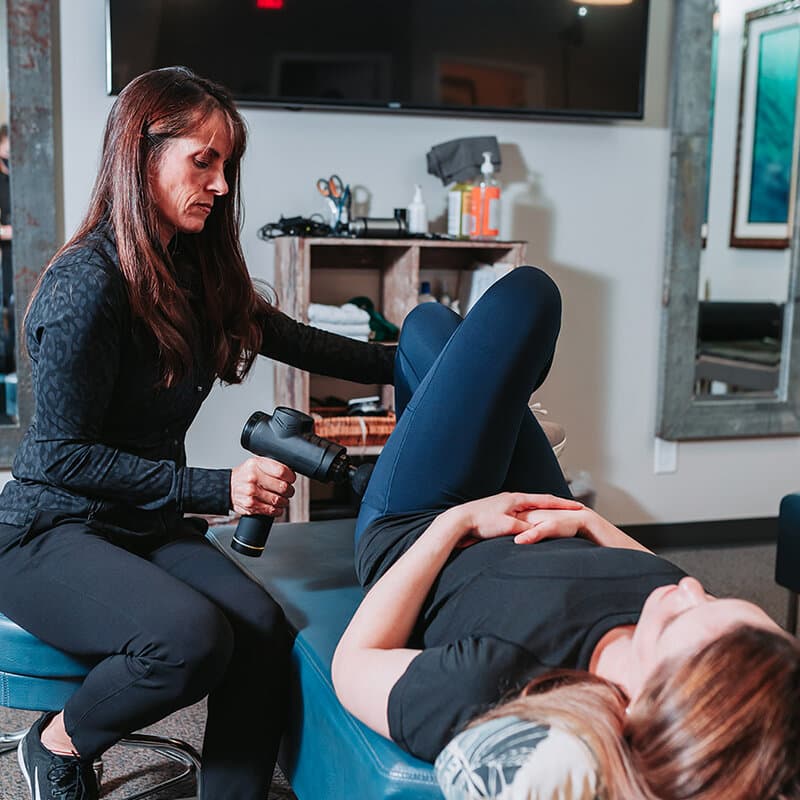
I flew to Florida, put the two top tables side by side, and ran them both. I chose the AccuSpina for the research behind it and for that one patented detail, the oscillation at maximum load. It is not the cheap option. I bought it anyway, because the table you lie on is doing the work, and I want the work done right.
My old budget table earned a nickname I still use, the pickup truck Toyota. It got you there, more or less, but it was not the one I wanted my disc patients on. So I traded up, and I have not looked back. I do not buy pickup trucks anymore.
What makes it different is the design. It is built to target one disc instead of pulling on the whole spine, it ramps the pull gradually so your muscles do not fight back and guard, and it adds that patented pumping oscillation at the peak. Those are design differences I can point to, not claims that it heals better than anything else.
Many clinics own a decompression machine. The AccuSpina is the one with the genuinely patented oscillation at maximum load. That is verifiable: USPTO patent US 7,717,870, for delivering decompression with an oscillation at high tension.
It is also an FDA-cleared Class II device for non-surgical spinal decompression. The patent and the clearance are facts about the machine. They are not a guarantee about your case, and I would never pretend otherwise.
The patients I help most with this table are disc cases. Below are the ones I see again and again. The only honest way to know whether you fit is the exam, where I look at your own scan and your own X-rays before I ever say the word decompression. Decompression is not right for everyone, and the first-visit exam is exactly what screens for whether it fits your case. If it is not the right tool for you, I will tell you straight and point you to what is.
When the jelly pushes out and presses on a nerve, that is the case decompression is built for. It is the number-one reason a patient ends up on this table.
The pain that shoots down into the buttock and leg. When a disc in the lower back is the thing pinching the nerve, taking pressure off it is exactly the point of decompression.
Chronic low back pain with disc degeneration and lost disc height. The gentle separation gives a worn disc room, and the oscillation works it while it is decompressed.
When an adjustment helps but the disc keeps the pain coming back, decompression is the next tool. The first visit tells me whether that is your case.
It is not only the low back. The table is built for the neck too, with the same gentle, computer-controlled pull, set to the level and angle your exam points to.
Starting from a symptom instead? Read about sciatica, a herniated disc, chronic lower back pain, or numbness and tingling down the leg, then bring your questions to the show-and-tell consultation.
Book your show-and-tell consultationor call (949) 365-0403 and ask for Carmen
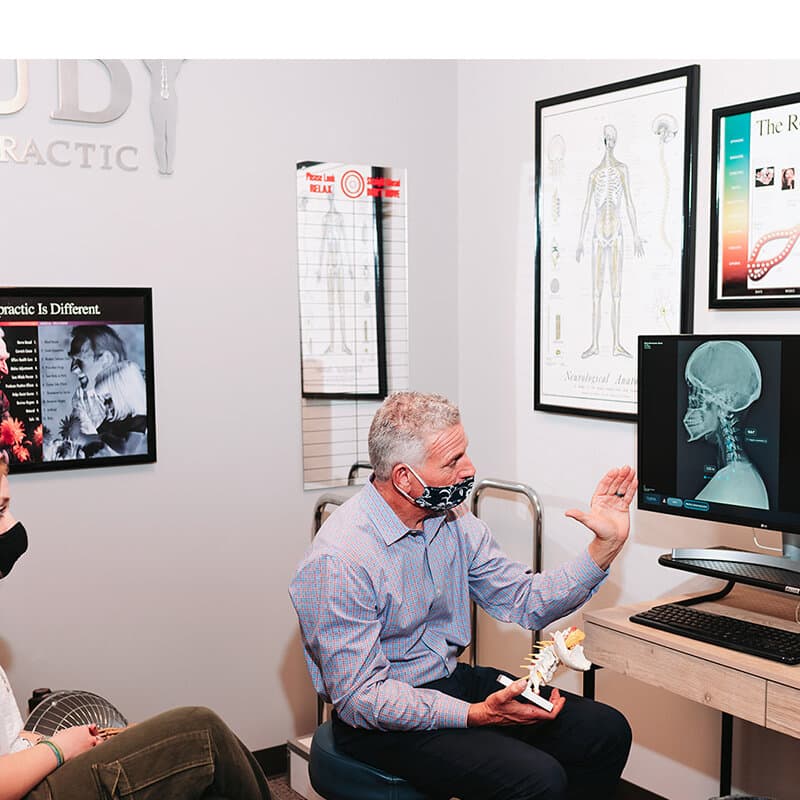
The standard program is $3,000 for 20 visits, and every plan shares the same shape: a correction phase on the table, a progress exam partway through to measure what changed, then a retainer schedule to hold it, the same way braces hand off to a retainer. A typical course runs about 20 sessions over four to six weeks. That is the standard; your exact plan is set after your exam, built from your own X-rays and reviewed with you at the Report of Findings.
You lie on the AccuSpina table while a programmed cycle gently separates the bones to take pressure off the disc, oscillating at the peak of each pull. The standard program is $3,000 for 20 visits; your exact schedule is set after your exam, built from your own X-rays.
Partway through, we re-measure. I want to see what the table actually changed, not guess. The progress exam tells us whether to stay the course, taper, or adjust the plan, and I show you the difference the same way I showed you the start.
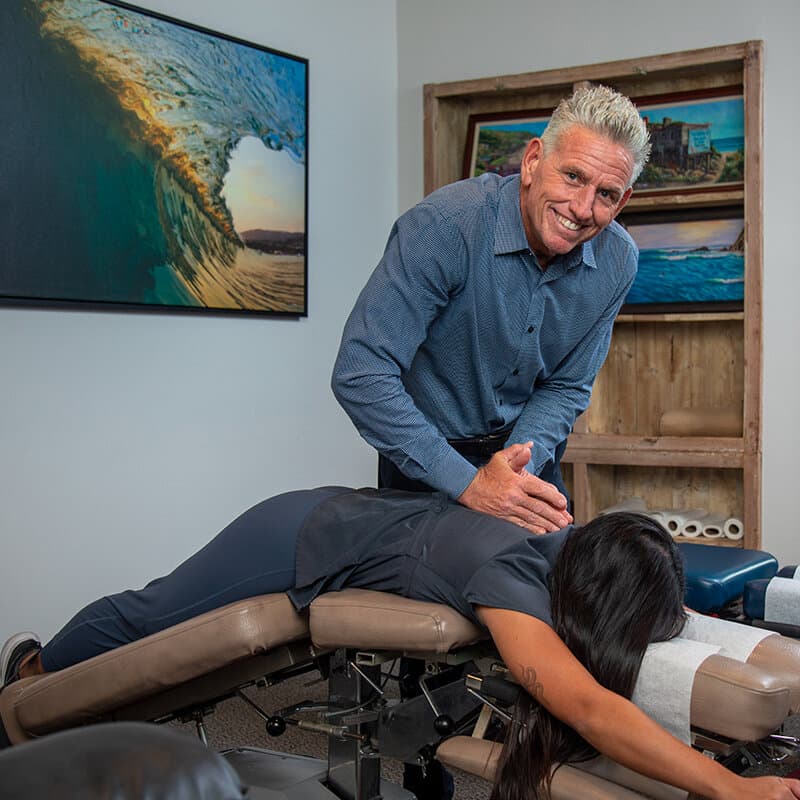
Like when the braces come off your teeth and you move to a retainer, after the plan we move to a retainer schedule to hold the progress. Less often, on purpose, so what we corrected stays corrected.

The table takes pressure off the disc, but holding the progress is its own job, and that is where Melanie comes in. Around visit 15, Melanie L. Foudy begins the corrective-exercise work. As an Integrative Corrective Exercise Specialist with two master's degrees and more than thirty years of experience, she reads your posture, movement, and muscle balance, then builds the stretching and corrective routine that makes the correction stick after the table work is done.
No hedging, no surprises. Most patients pay cash, since most insurance does not cover non-surgical decompression, and Carmen can verify your coverage when you call. The number that matters first is the $90 show-and-tell visit, because that is where you find out whether decompression is even the right tool for you.
The full first visit that screens whether you are a candidate. The exam, the surface EMG, and digital X-rays, all in one appointment, about 75 minutes. You leave with a straight answer.
The standard decompression program, with the chiropractic adjustment bundled in at half price for the duration. Your exact plan is set after your exam, built from your own X-rays.
A single AccuSpina decompression session on its own. We rarely sell these, because a disc case responds to a course of care, not a one-off.
Book your show-and-tell consultationor call (949) 365-0403 and ask for Carmen
I am not going to put a number on a website and ask you to trust it. I will put you on the exam table instead. The show-and-tell consultation is the full picture in one visit: the postural scales, the surface EMG (an EKG of your nervous system), the digital X-rays, and the palpation, all in about 75 minutes. You will see your own scan and your own films, and you will leave with a straight answer.
Here is the honest version. The AccuSpina is a very good machine for disc cases. It is not a miracle, and I will never sell it as one. What gets the result is the whole plan around it: the right candidate, an honest exam, a correction phase, a progress check, a retainer schedule, and Melanie's corrective work to hold what we gained. If you are not a candidate, I will say so on the first visit and point you to what actually helps. I would rather send you down the street than put you on a table that was never going to help your case.
Book your show-and-tell consultationor call (949) 365-0403 and ask for Carmen
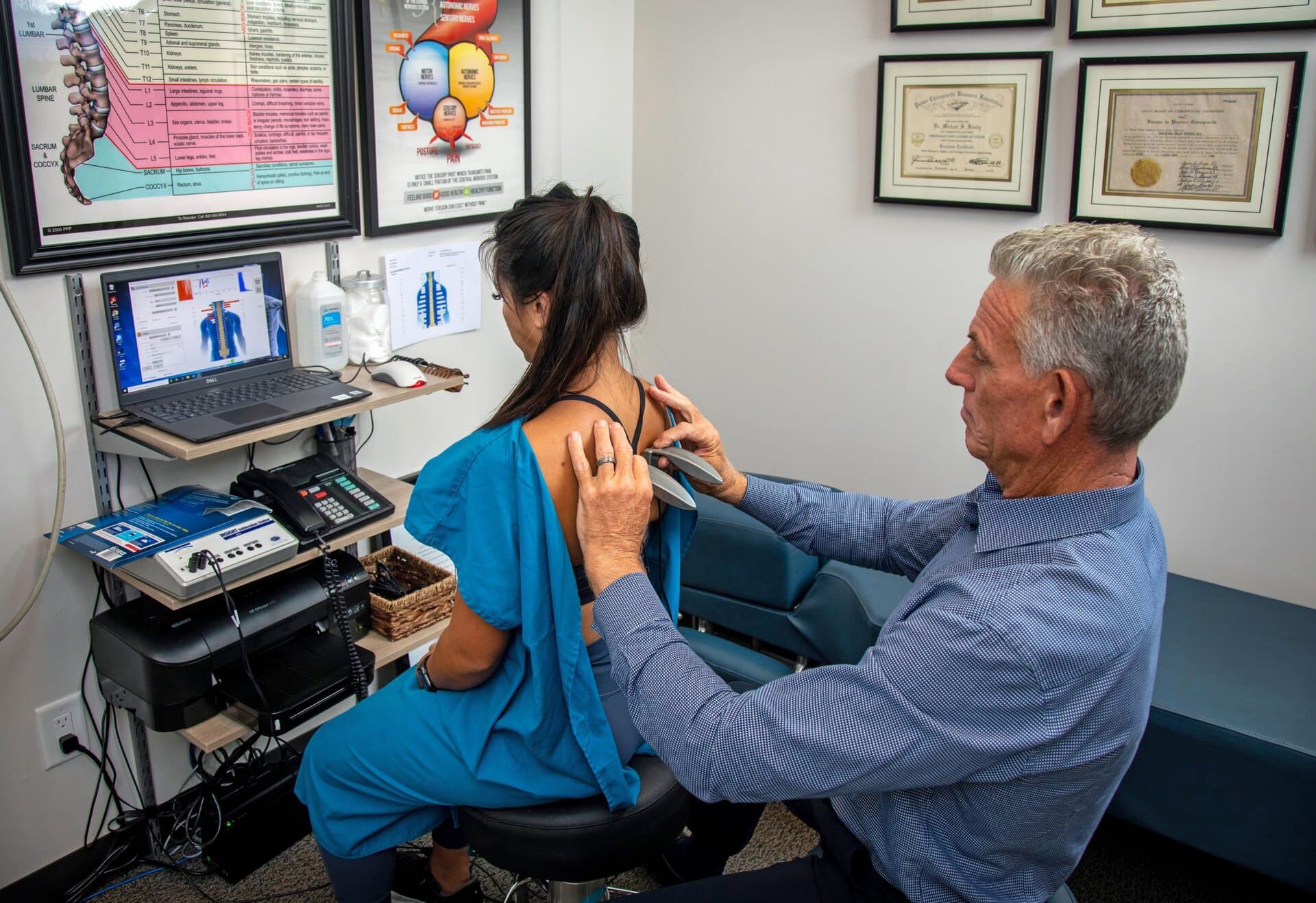
The show-and-tell consultation in Mission Viejo includes the exam, the surface EMG, and the X-rays, about $90 and 75 minutes. You will see your own scan and your own films, and you will leave with a straight answer about whether the AccuSpina is the right tool for you. The standard program is $3,000 for 20 visits, and a single session is about $160. Patients come to us from Lake Forest, Aliso Viejo, Laguna Niguel, Rancho Santa Margarita, and across Mission Viejo. Call Call (949) 365-0403 and ask for Carmen.