Yes, we can almost always help. That neck pain with the knot that keeps coming back between the shoulder blades is usually cervical joints stuck out of alignment plus forward head posture, and at Foudy Chiropractic in Mission Viejo the first step is one show-and-tell visit, postural measurement, an AP open-mouth X-ray of the atlas and axis, and a surface EMG, so we see exactly what is going on.
One unhurried visit tells you what is going on and whether Dr. Foudy can help. Thursday is afternoons only, 3:00 to 6:00 pm.
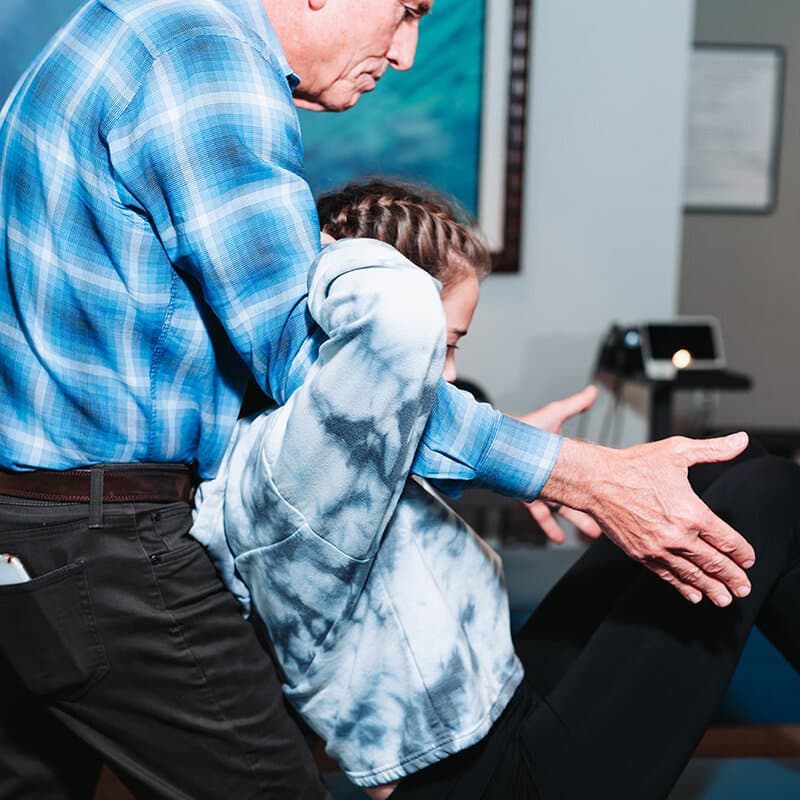
Dr. Foudy performing a neck adjustment at his Mission Viejo office
In your own words
Does one of these sound like you?
Most patients arrive describing how they feel, not naming a diagnosis. If one of these is yours, you are in the right place. One visit tells you where you stand.
Every time I turn my neck a certain way, I get this shooting pain into my shoulder bladesThis knot keeps coming back, all knotted up between my shoulder bladesMy neck is stiff and sore, especially after a day on the phone or the computerSometimes the pain or tingling runs down into my armI get pain at the base of my skull
What is actually going on
What is actually going on, in plain terms.
Most neck pain is two things stacked together. First, the cervical joints get stuck out of alignment, the way a circuit breaker trips, and the muscles around them work overtime to guard the spot. That guarding is the knot you keep feeling. Second, the head drifts forward of the shoulders from years of screens, and for every inch it moves forward the neck carries roughly ten extra pounds of load. So the joints get stuck, the muscles knot up protecting them, and the forward head keeps reloading the whole thing. Some neck pain also runs down the arm when a nerve is involved. The exam tells us which parts are in play, and the knot stops coming back once the posture and the joints are corrected, not just rubbed out.
Dr. Foudy performing a neck adjustment at his Mission Viejo office
Can you help me, what is it, how long, and how much.
These are the four questions I hear on every first call, so here they are answered in order. The honest version of each, with real numbers, not a sales pitch.
Can you help me?
Yes, here is the honest answer.
Almost always, yes. Neck pain is one of the most common things I treat. The rare exceptions, a fracture, a tumor, or pain after a serious trauma, get the right imaging first. One visit tells us which one you are.
What is it?
What is actually going on.
Usually cervical joints stuck out of alignment plus forward head posture, with the muscle guarding that comes with both, and sometimes a nerve running down the arm. The postural exam, the AP open-mouth X-ray of the atlas and axis, the range-of-motion study, and the surface EMG tell us exactly what is in play. I show you on your own films.
How long?
How long it usually takes.
Mechanical neck pain often calms down inside a few weeks of care. Posture-driven neck pain takes longer to undo, because the head has to be retrained to sit back over the shoulders, which is where the corrective exercise comes in. Your exact plan is set after your exam.
How much?
What it costs, plainly.
The show-and-tell consultation that finds the cause is $90 and about 75 minutes. A standard adjustment visit is $90 and includes the neck traction, Theragun, and electric stim for the trap knots when you need them. We go over your plan in person.
Who this helps, and who it does not
Are you a candidate for care here?
You are a good fit if your neck pain is coming from the joints, the posture, or the muscles, which covers the large majority of cases. When I refer out: neck pain after a serious car accident or fall before it has been imaged, progressive weakness or numbness in the arm or hand, or any red-flag pattern, those get the right workup first. If what I find is not mine to fix, I will tell you straight and send you to the right person.
Dr. Foudy reviewing a patient's own X-rays before recommending a plan.
Straight talk
One visit tells you what is going on, and I will tell you straight.
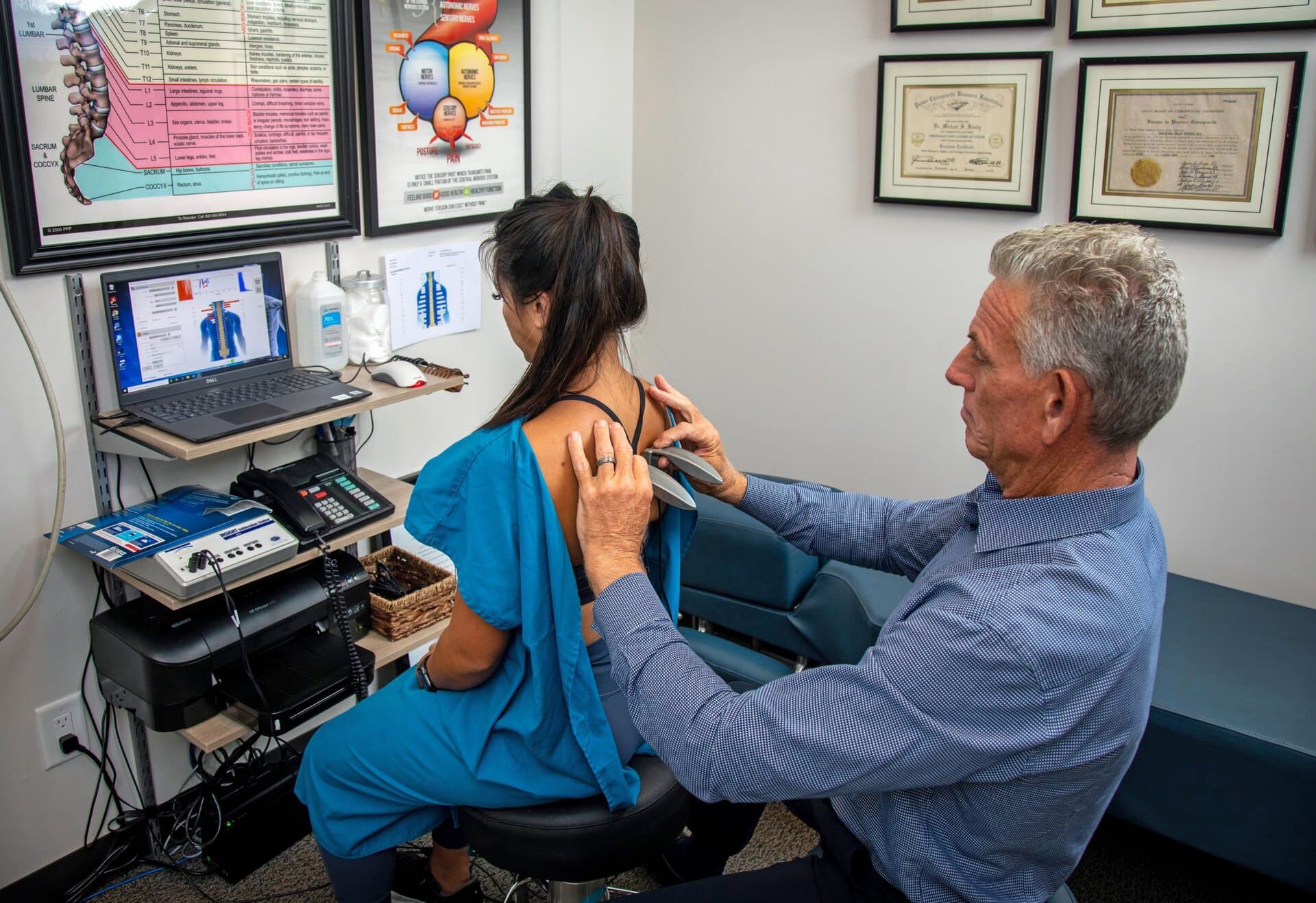
The show-and-tell consultation is the full picture in one visit: the postural scales, the surface EMG (an EKG of your nervous system), the digital X-rays, and the hands-on exam, all in about 75 minutes. You will see your own scan and your own films, and you will leave with a straight answer about your neck pain.
If this is mine to fix, I will tell you the plan. If it is not, I will tell you that too, and point you to what actually helps. I would rather send you down the street than put you on a plan that was never going to help your case. The first visit is $90 and runs about 75 minutes.
Dr. Foudy reviewing a computerized nervous-system scan with a patient, like an EKG of the nervous system.
Good questions, asked often
Questions patients ask about neck pain
No. It's a release of gas from the joint capsule, the same thing that happens when you crack a knuckle. The adjustment is precise and controlled, and we diagnose and X-ray before we ever adjust.
Yes. Cervicogenic headaches start at the base of the skull and travel up. Dr. Foudy specifically looks for atlas and axis misalignment on the AP open-mouth view, an X-ray most headache patients have never had taken.
Cervical alignment and TMJ are linked, and we screen for it. If TMJ is the primary driver we coordinate with a dentist who does TMJ work.
The knot is a symptom of the posture. Once the posture changes, the knot stops. That usually takes a few months of consistent adjustments plus the corrective exercise.
The show-and-tell consultation in Mission Viejo includes the exam, the surface EMG, and the X-rays, about $90 and 75 minutes. You will see your own scan and your own films, and you will leave with a straight answer. Patients come to us from Lake Forest, Aliso Viejo, Laguna Niguel, Rancho Santa Margarita, and across Mission Viejo. Call Call (949) 365-0403 and ask for Carmen.